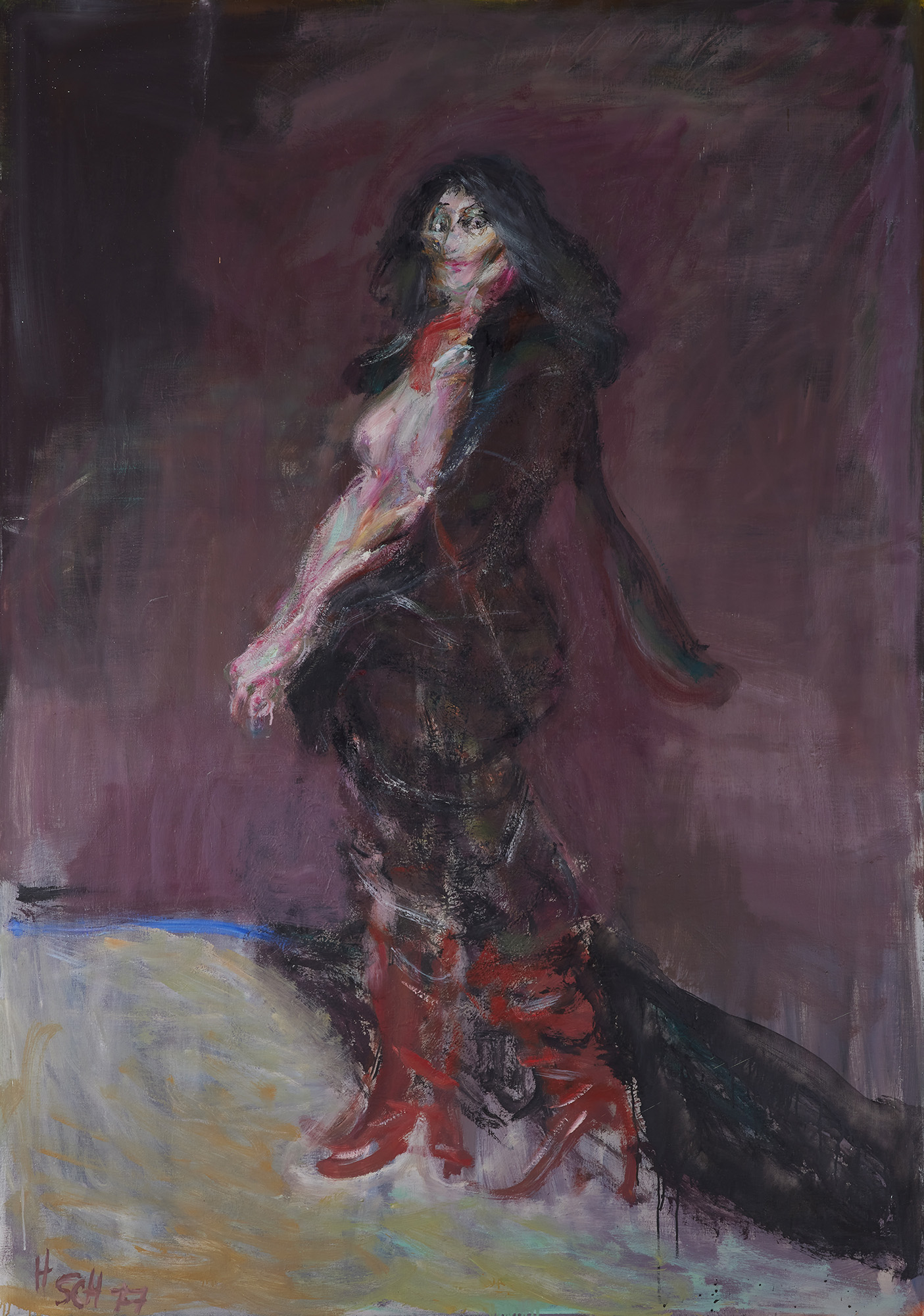
Herwig Schubert’s large-format oil paintings from the 1960s are painted with vehemence and dynamism, rich in contrast and explosive in colour and imagery. Schubert’s themes are Nordic landscapes (Iceland, Greenland, Spitsbergen, northern Canada), the human figure (nudes, portraits), and battle scenes.
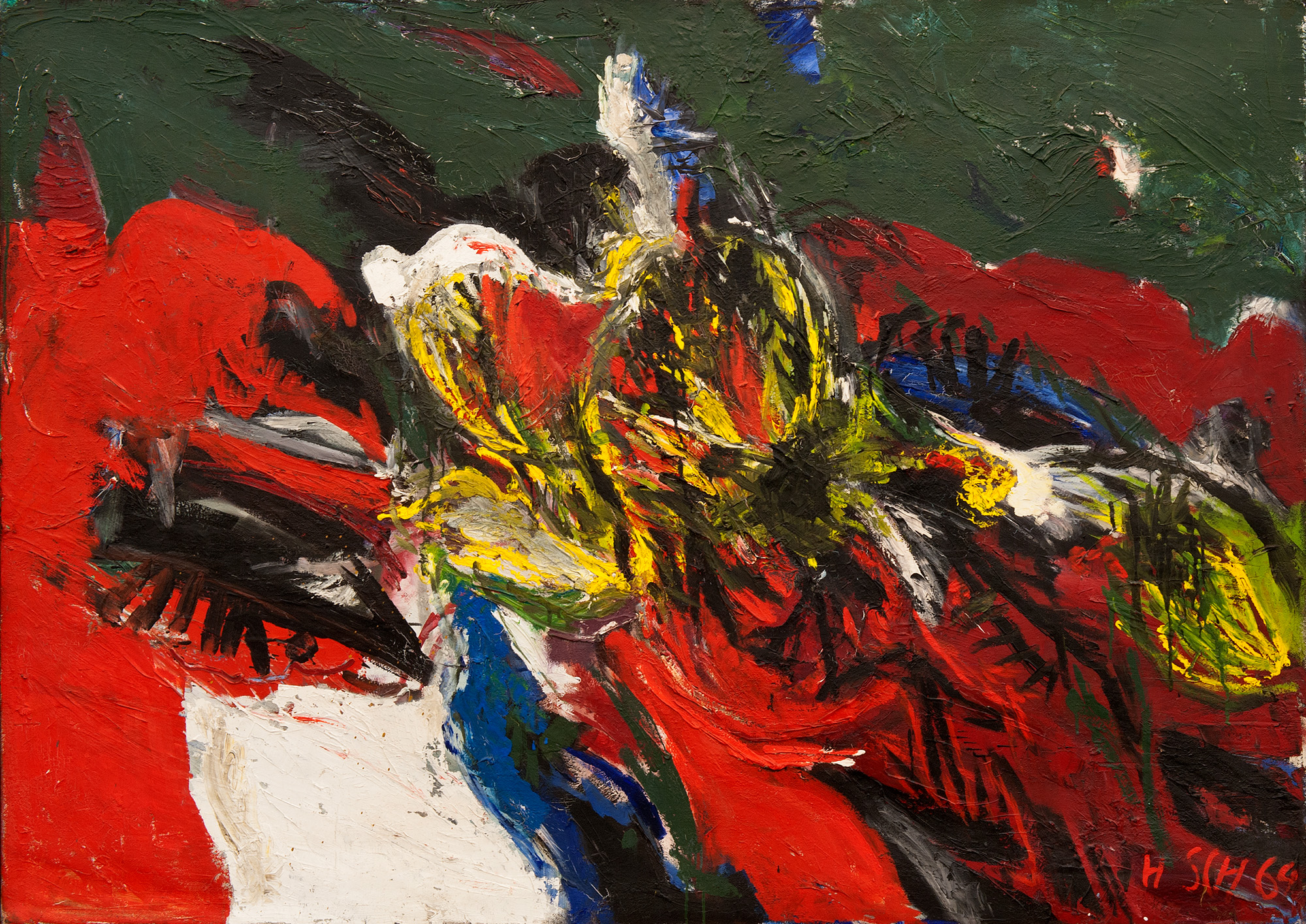
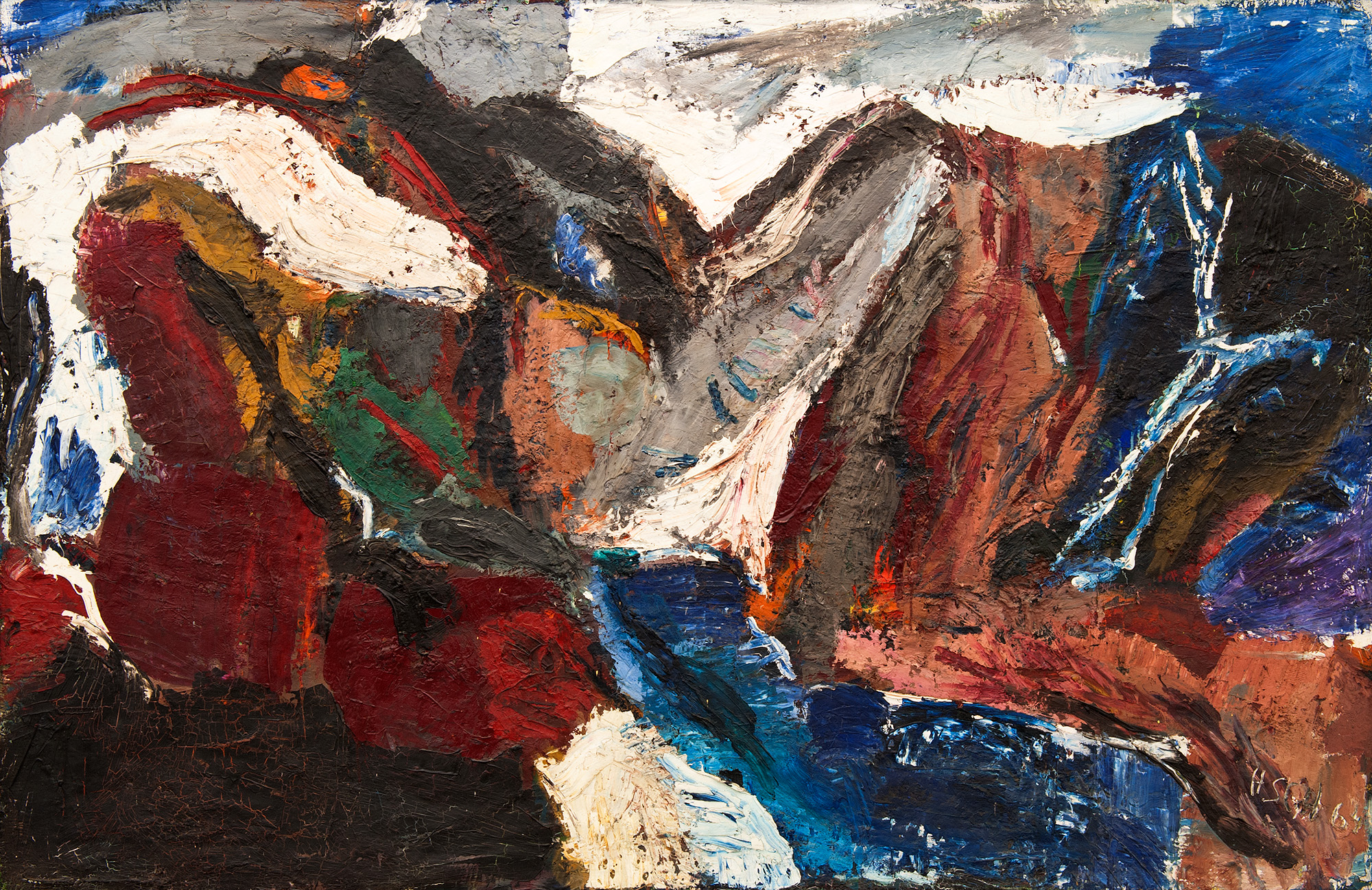
Drawing on the expressive techniques of abstract expressionism, Schubert’s landscape paintings bring to life the eruptive formations and colours of the northern countries he travelled through.
Large-format landscapes
Island, 1962
Öl auf Leinwand, 121 x 171 cm
Privatbesitz
Landschaft auf Island, 1964
Öl auf Rupfen, 120,5 x 170 cm
Salzburg Museum, Salzburg
Nordische Landschaft, 1964
Öl auf Rupfen, 120,5 x 185,5 cm
Privatsammlung
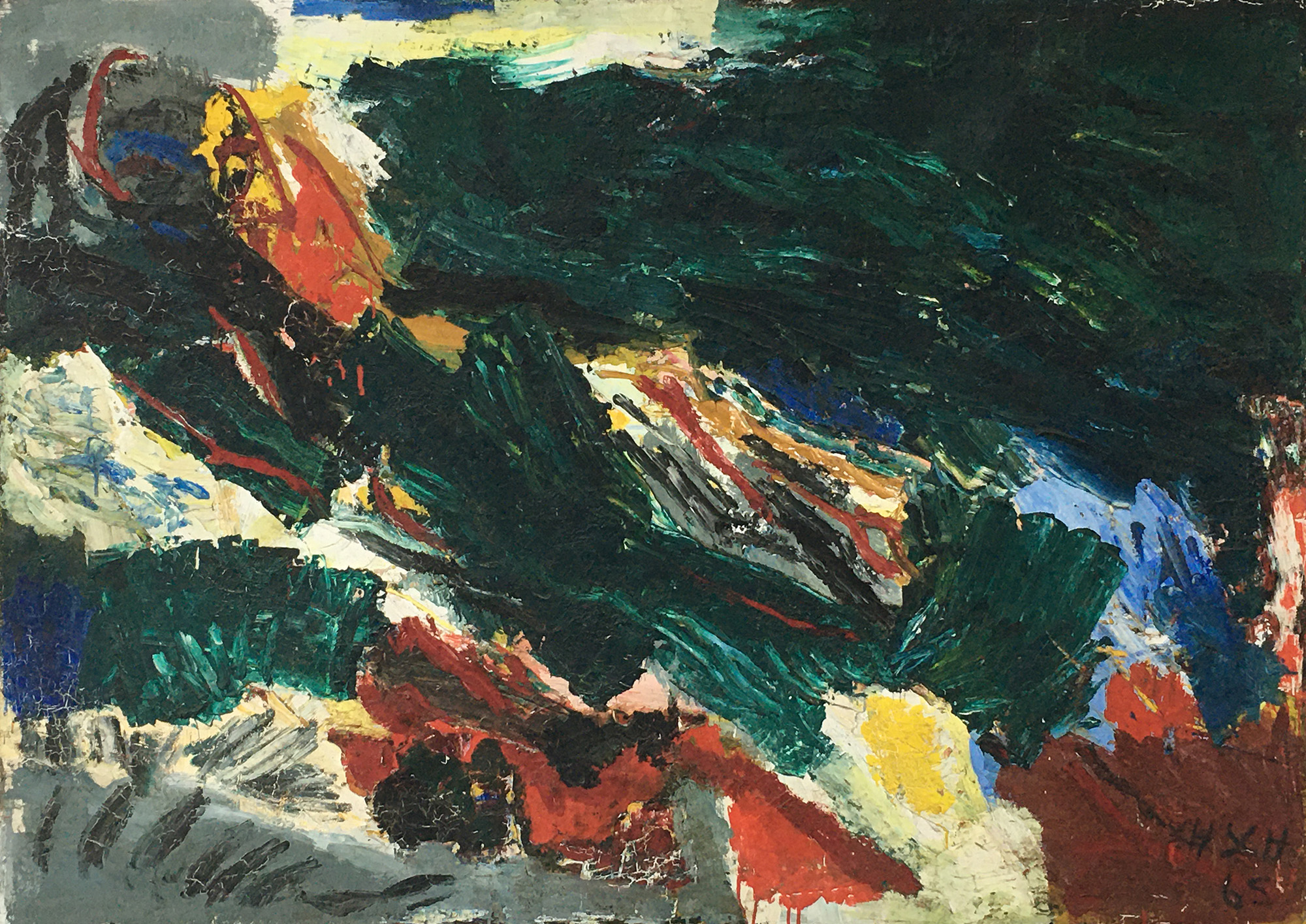
Grönland, 1965
Öl auf Rupfen, 120 x 170 cm
Sammlung W.H.
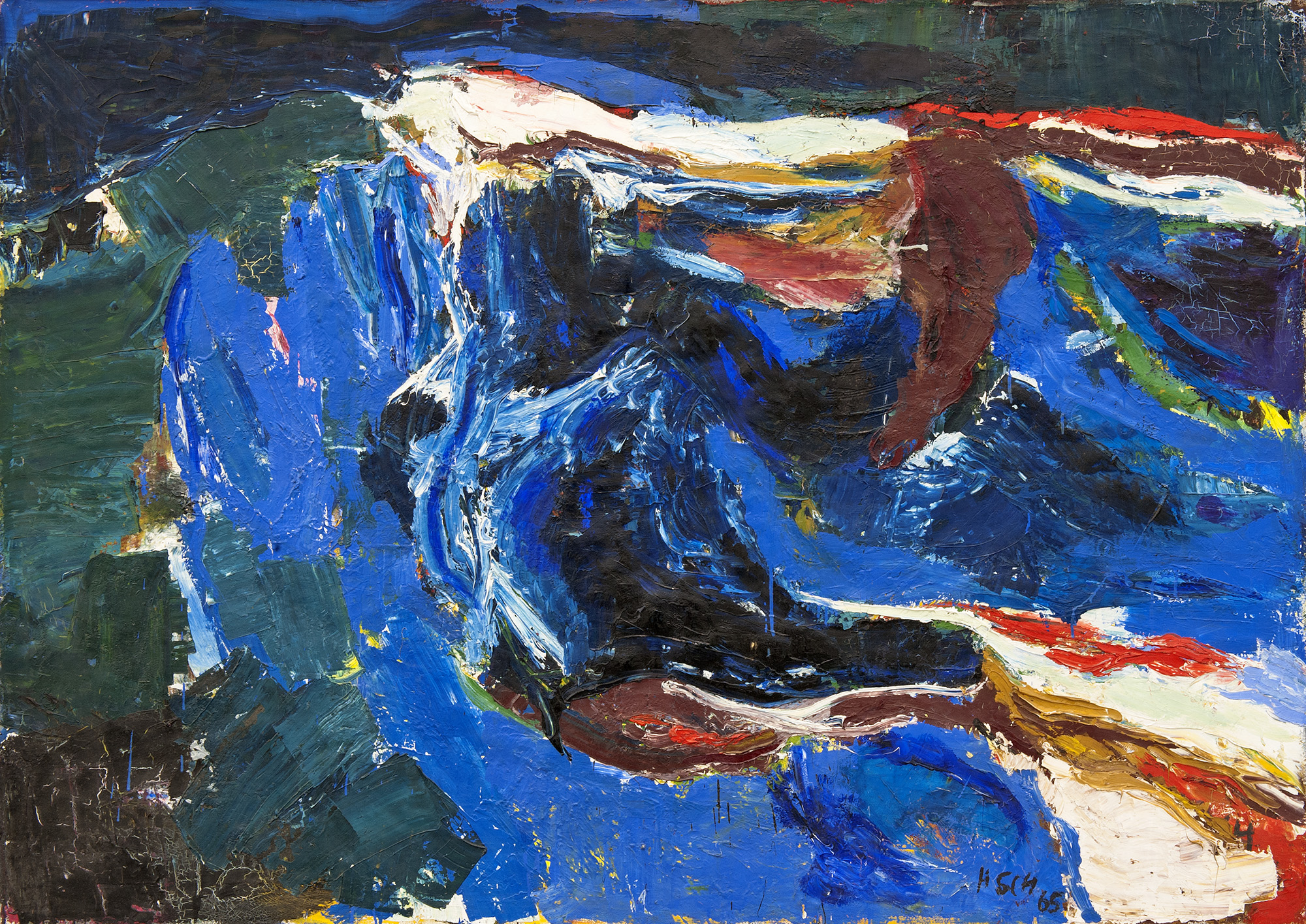
Landschaft auf Island, 1965
Öl auf Rupfen, 120,5 x 170 cm
Privatbesitz
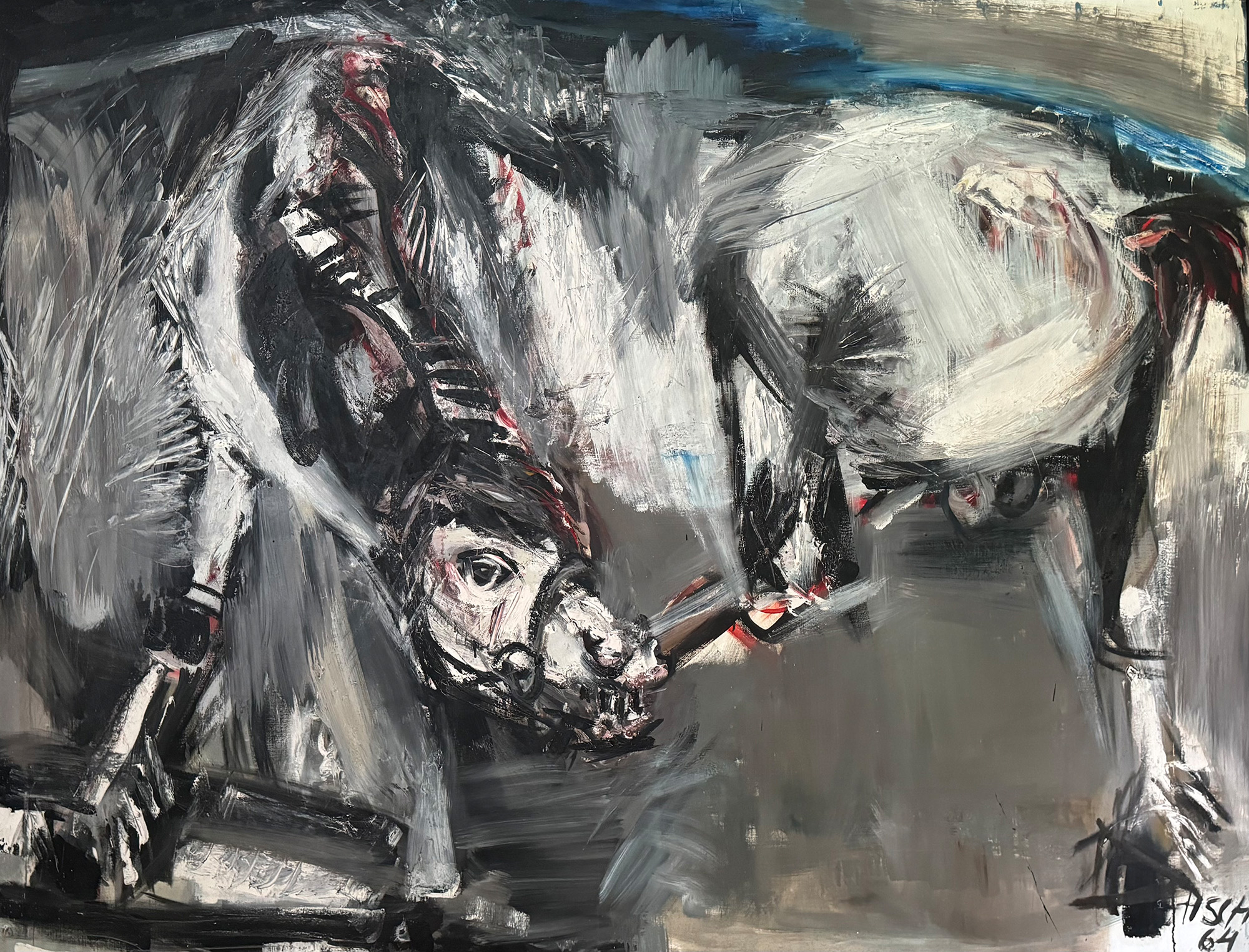
Islandpferd, 1964
Öl auf Rupfen, 150 x 196 cm
Privatbesitz
Monumental paintings
“They are works of oppressive relevance.”
Dmitry Kaminker
Sculptor (St. Petersburg)
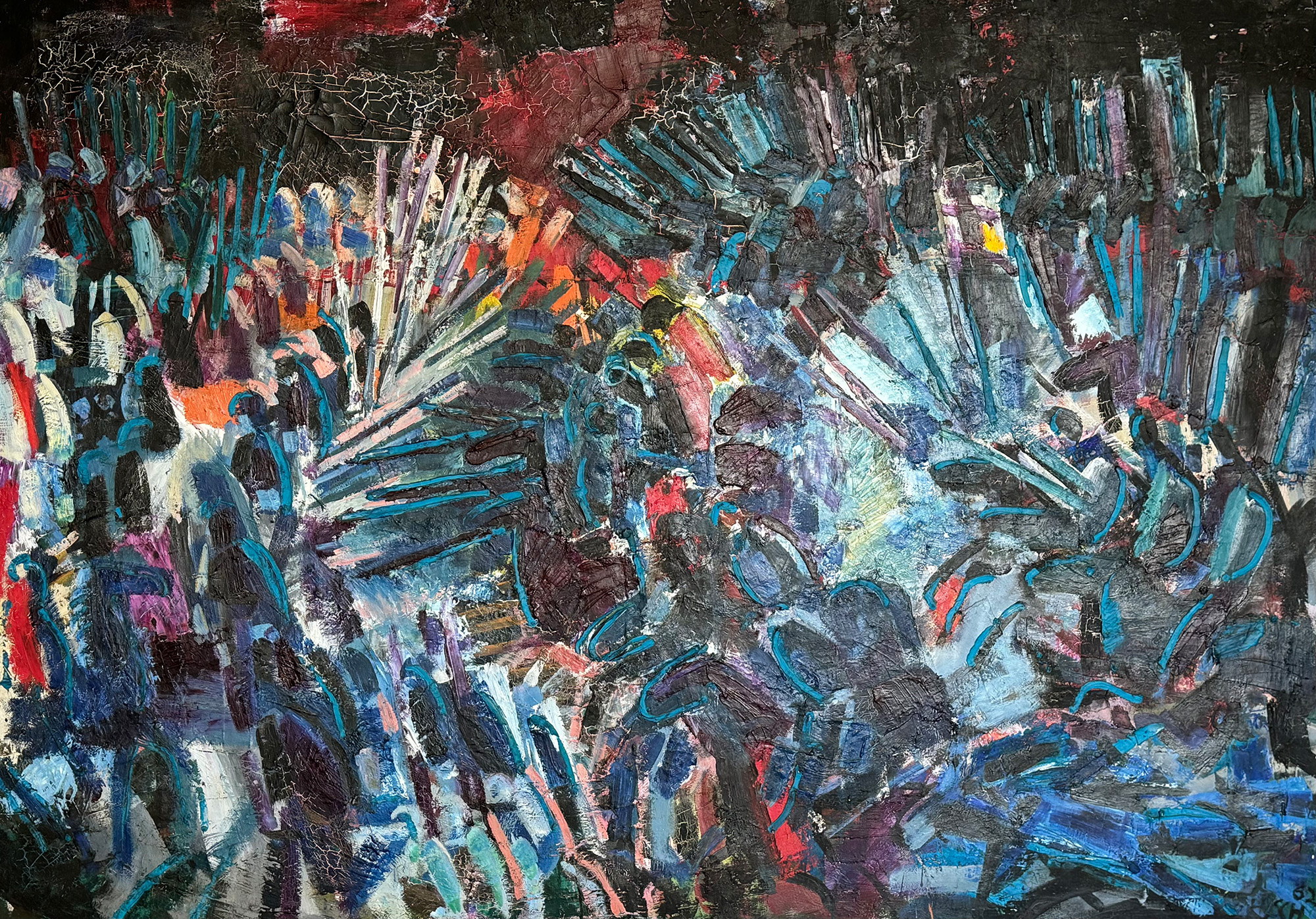
The furious imagery and painterly style of the monumental works ‘Apocalyptic Horsemen (Triptych)’ and ‘Cavalry Battle’ mark a high point in Schubert’s oil painting. The driving force behind these paintings is clearly his wartime experiences of violence and destruction and a powerless outrage at the deadly devastation. The horses appear in the triptych as carriers and amplifiers of human aggression and in the second painting as a symbol of mourning for the victims.
As these paintings were at odds with the abstract approach favoured during the post-war period, Schubert first presented the ‘Apocalyptic Horsemen’ and ‘Cavalry Battle’ to the public in 2011/12 at the Salzburg Museum in the New Residence in Salzburg.
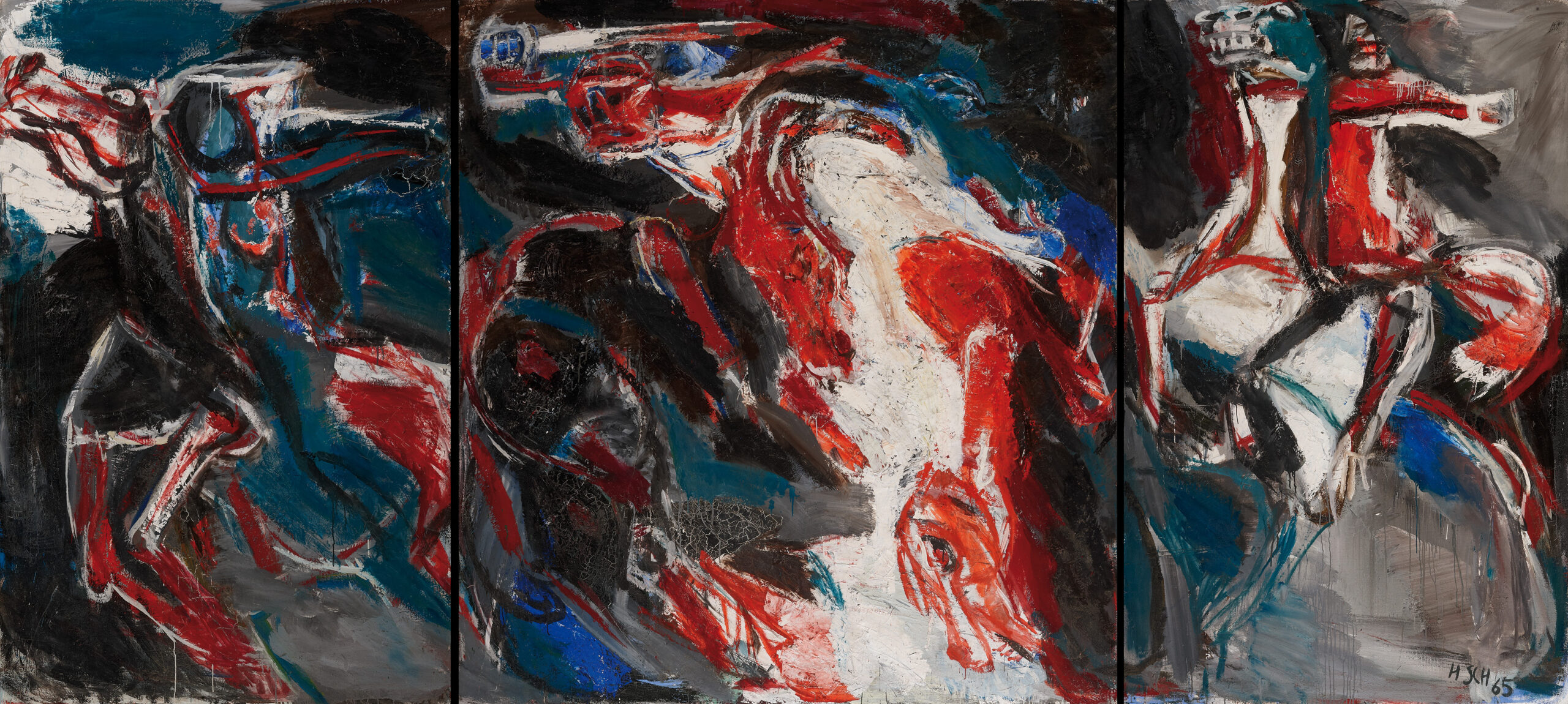
Apokalyptische Reiter – Triptychon, 1965
Öl auf Rupfen
Seitenteile je 205 x 130 cm, Mittelteil 205 x 190 cm
Museum der Moderne MdM, Salzburg
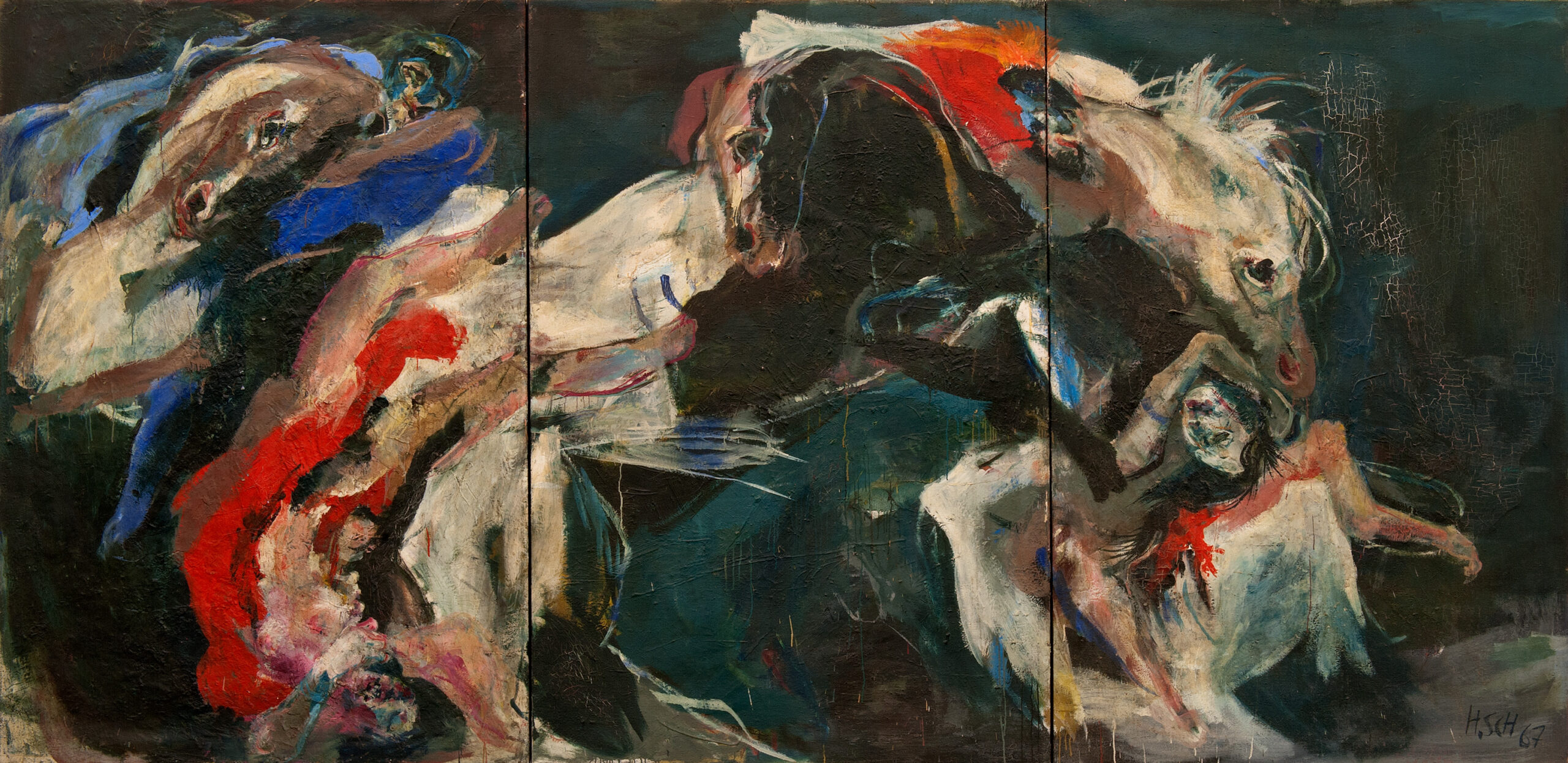
Reiterschlacht (3 Teile),1967
Öl auf Rupfen
185,5 x 377 cm
Museum der Moderne MdM, Salzburg
Large-format figural paintings
The majority of the artist’s large-format figure paintings from the 1970s are female nudes who fill the entire canvas space. They are more studies and expressions of essence than depictions of specific human figures.
The central positioning and dynamic compositions of the bodies, the way the gazes are turned towards us or away, and the black painted faces lend the figures a strong sense of presence and independence that evokes the mythical figures in egg tempera from Schubert’s later work.
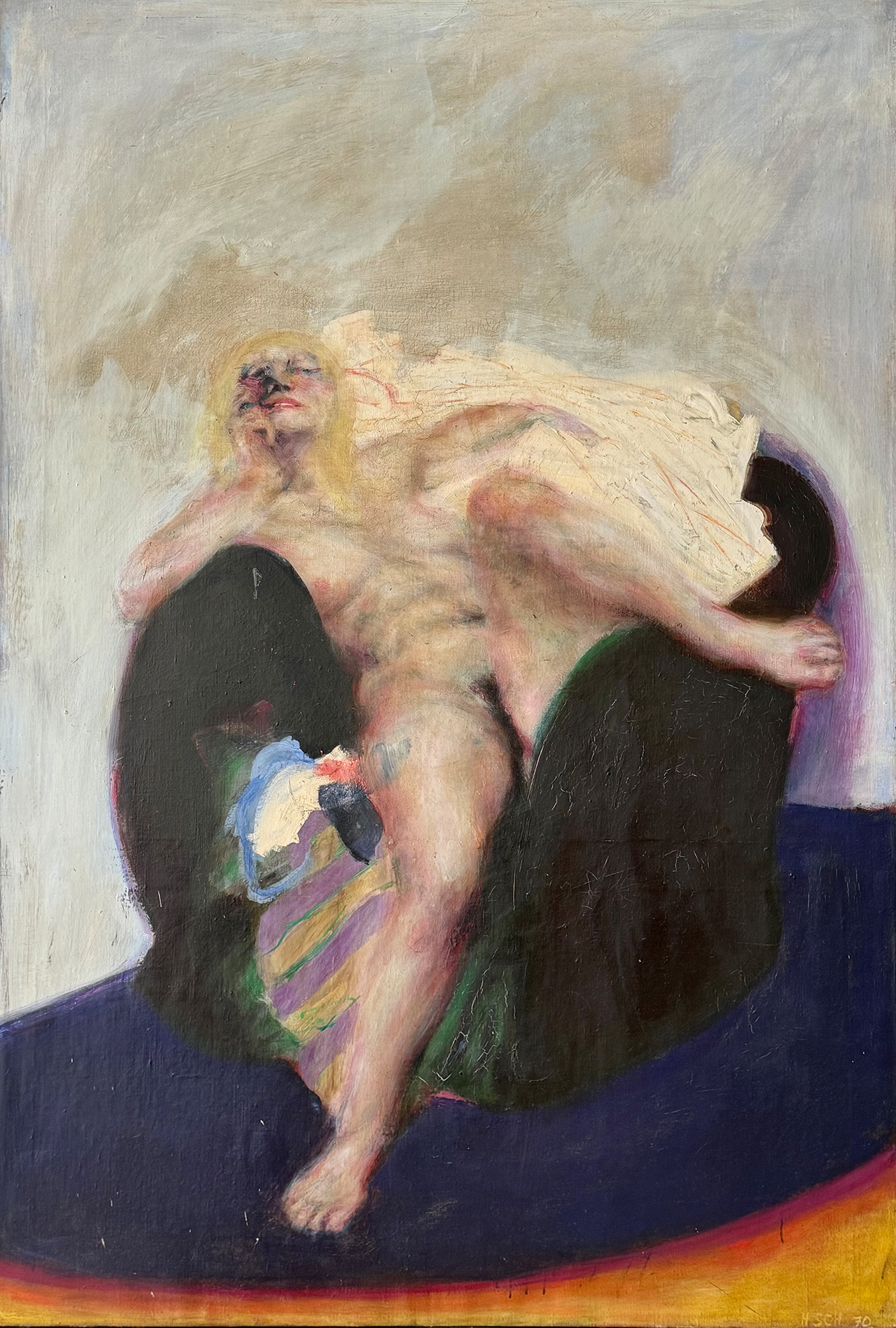
Dame im Fauteuil, 1970
Öl auf Leinwand, 185 x 125 cm
Privatbesitz
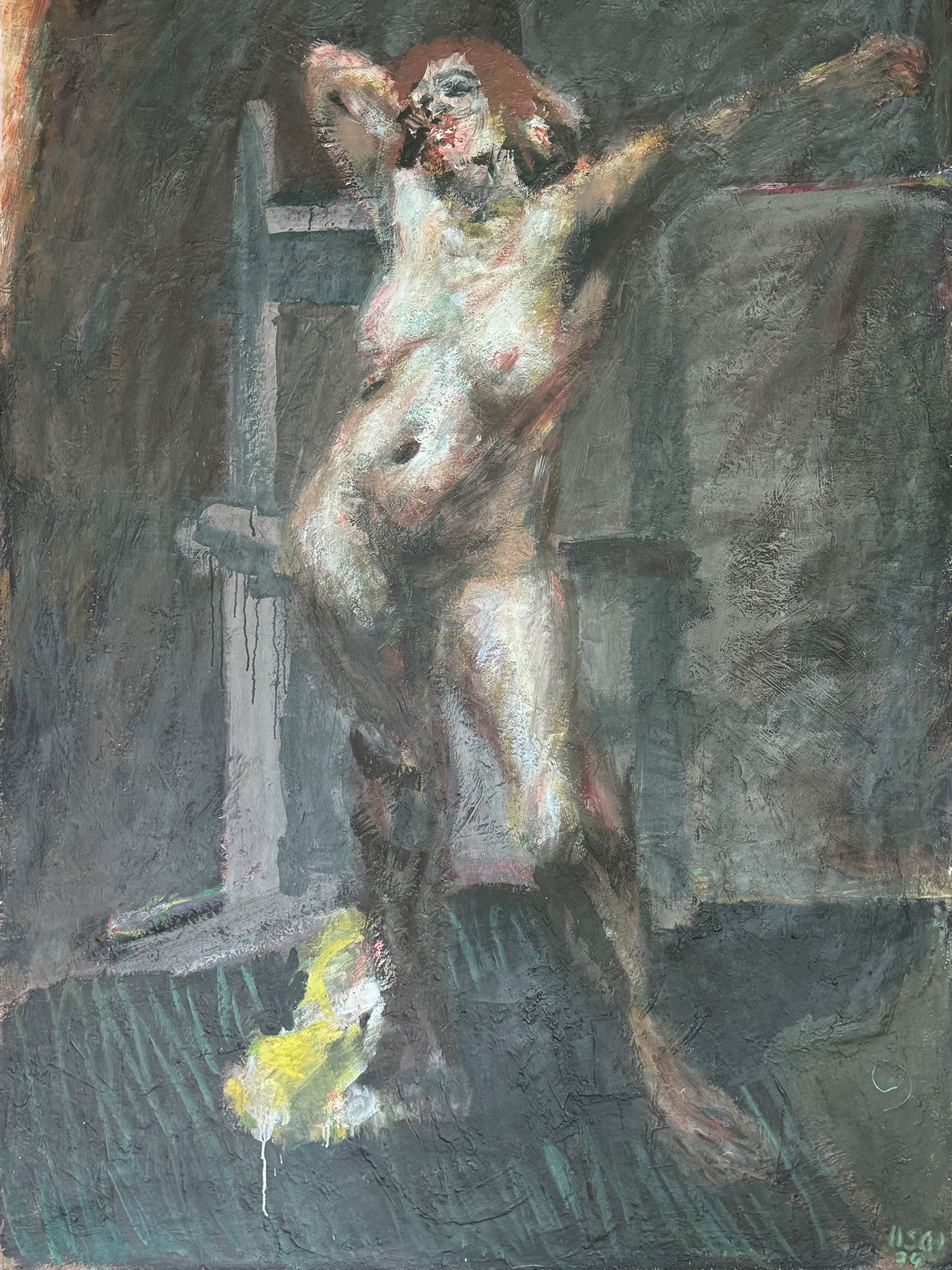
Stehende, 1974
Öl auf Leinwand, 187 x 130 cm
Privatsammlung
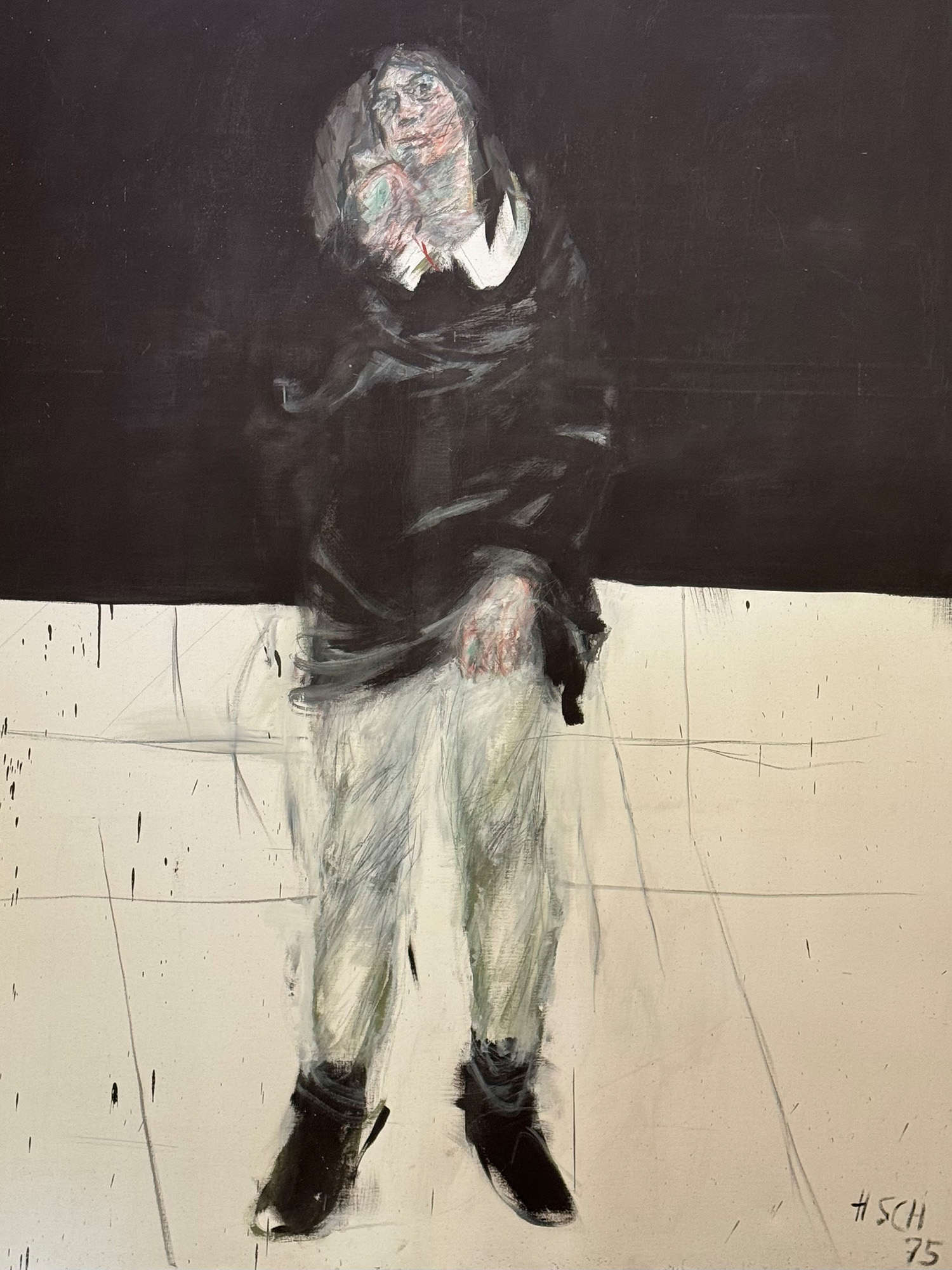
Maud, 1975
Öl auf Leinwand, 185 x 150 cm
Privatsammlung
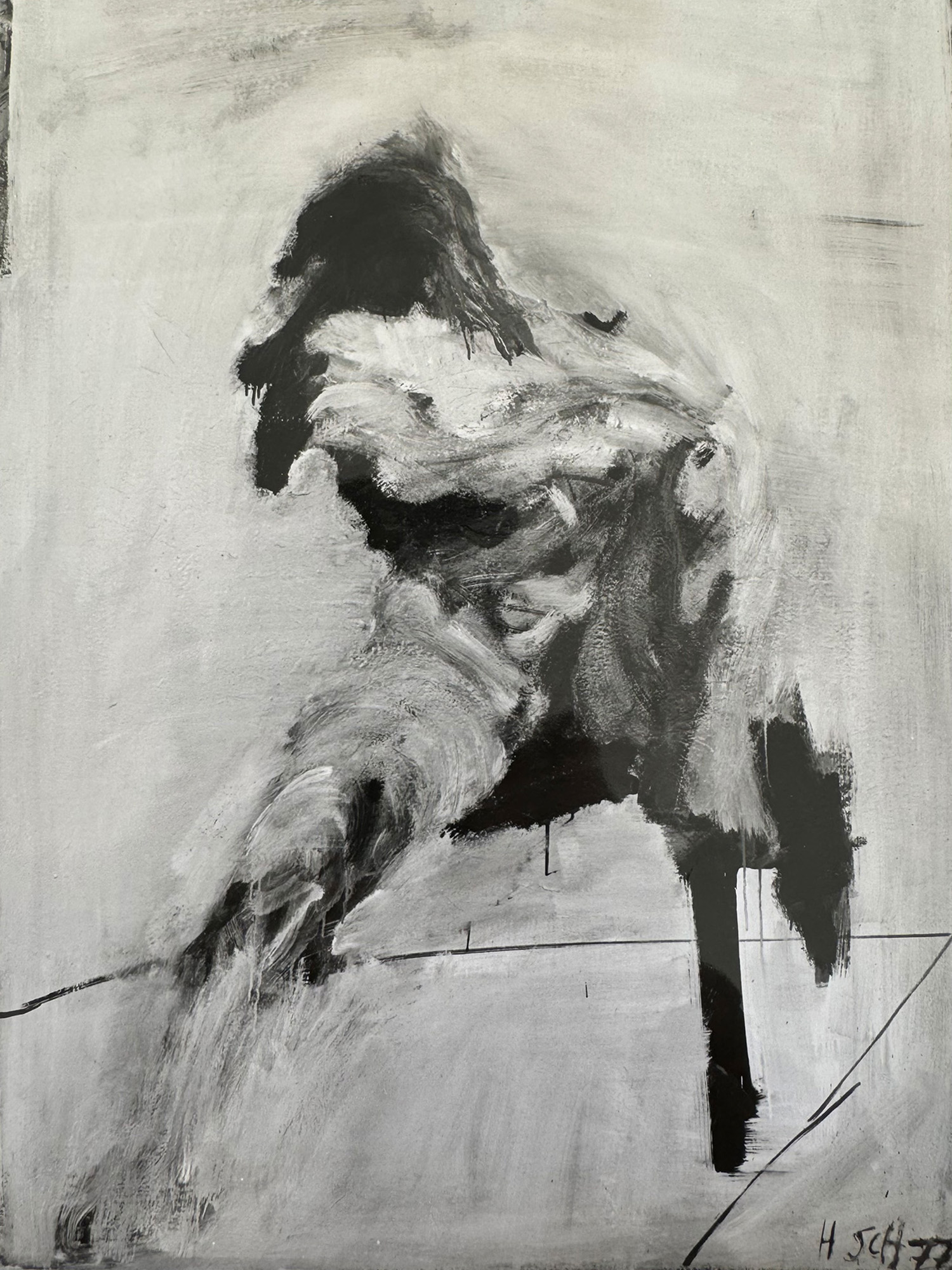
o.T., 1977, S/W Foto
Öl auf Leinwand, 185 x 130 cm
Ort unbekannt
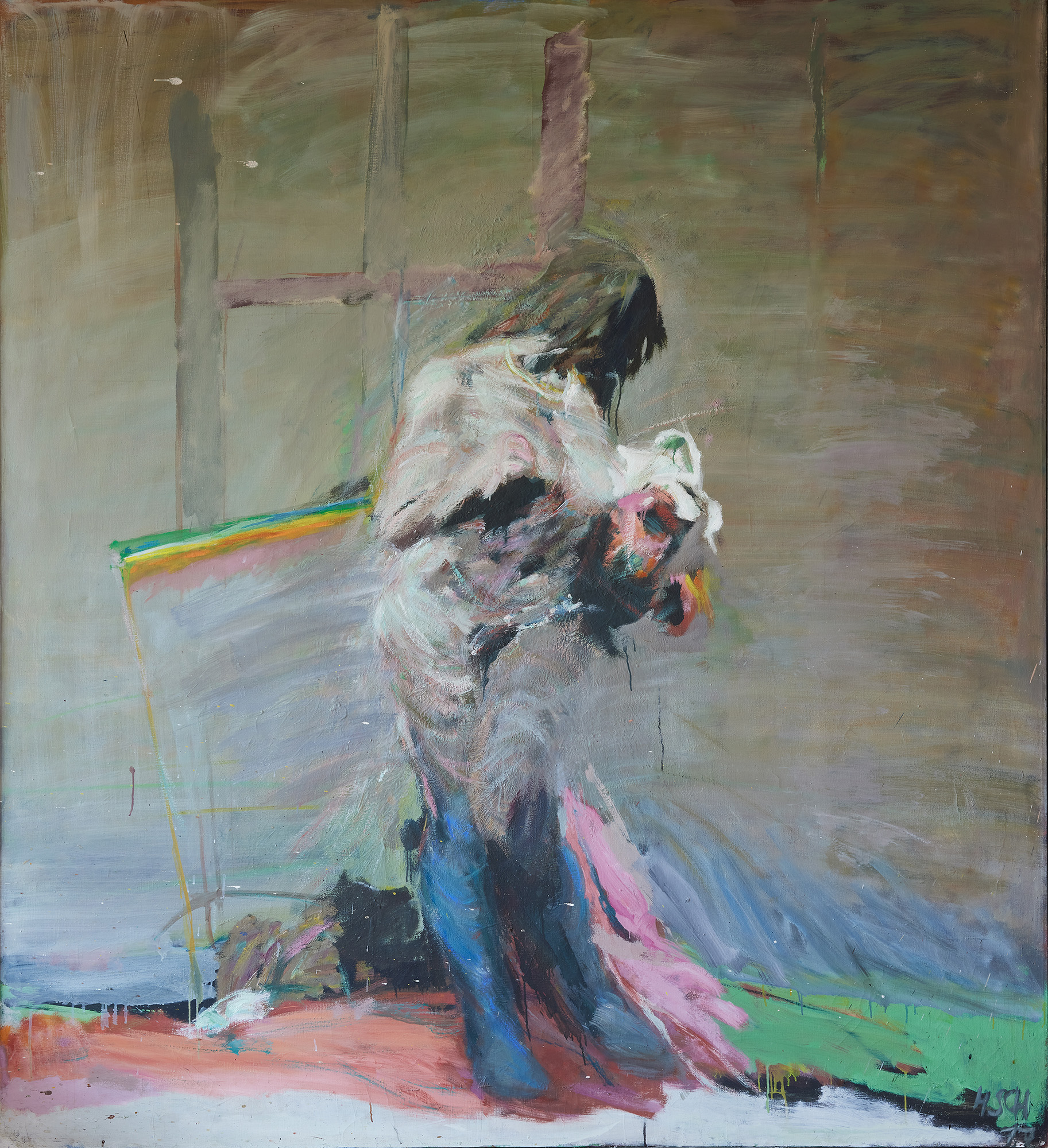
Atelierbild, 1977
Öl auf Leinwand, 210 x 190 cm
Privatbesitz